To implement the spirit of the university's Twelfth Congress of Party Representatives and innovate the school's mechanism of innovative talent training, the School of Resource and Environmental Engineering recently organized 15 outstanding undergraduates to travel to Singapore to take an overseas study tour. Cao Na, the Deputy Secretary of the Party Committee of the School of Resource and Environmental Engineering, Zhou Lei, the Director of the Department of Environmental Engineering, and Sun Qian, the full-time counselor, led the group to travel.
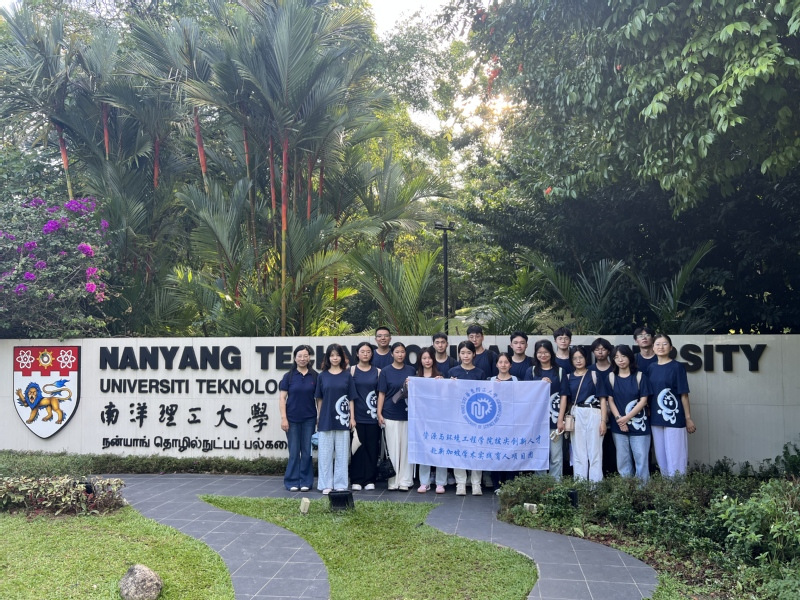
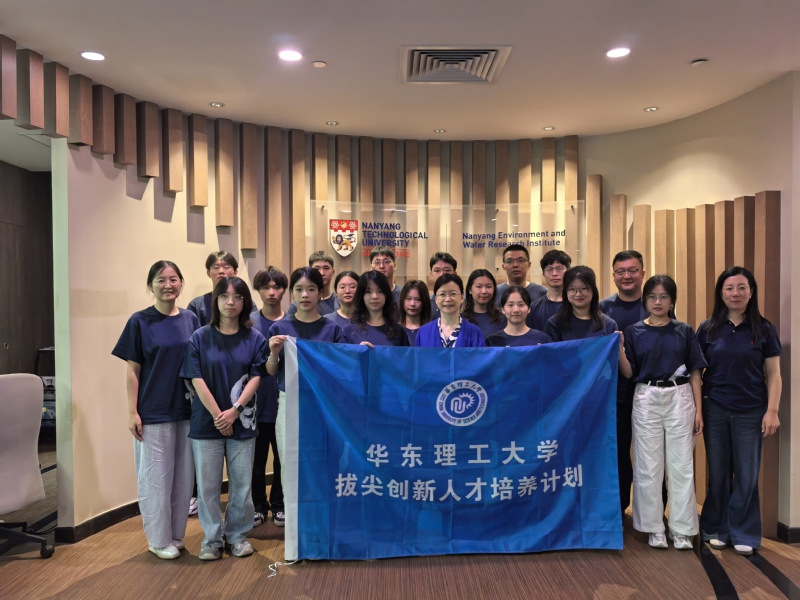
The practical group participated in the events, such as the cutting-edge lecture of the industry, professional laboratory visit, international course audit, etc., in Nanyang Technological University. Professor Wang Rong, an Academician of the Academy of Engineering, Singapore and the director of the Research Institute of Resource and Water Environment of Nanyang Technological University, combined her studies and the developmental practice of NEWRI to introduce the cutting-edge studies and representative projects of the research institute in the fields of resource survey, new water production, water environment governance, etc. She mainly centered on the sustainable water supply system of Singapore and advanced water treatment technology to explain how water-lacking cities realize efficient water resource utilization and recycling through technical innovation layer by layer for students, covering the current situation of Singapore's water resources, the layout of the water supply system, and the application scenarios of key water treatment techniques, such as membrane separation, advanced oxidation, etc. The content was abundant and closely related to the core concern about the specialty, Resource and Environmental Engineering. She also guided teachers and students to visit the Center of Biological and Environmental Technology, the Membrane Technology Laboratory, and the Laboratory of Environmental Analysis, and centered on the issues of membrane preparation and amplification for application to carry out heuristic teaching for students. The practical group also listened to the course of the Department of Civil Engineering and Environmental Engineering, Project Planning & Management. The teacher of the course, Dr. Teoh Bak Koon, combined local engineering cases of Singapore to analyze and explain and communicated with teachers and students of the practical group.
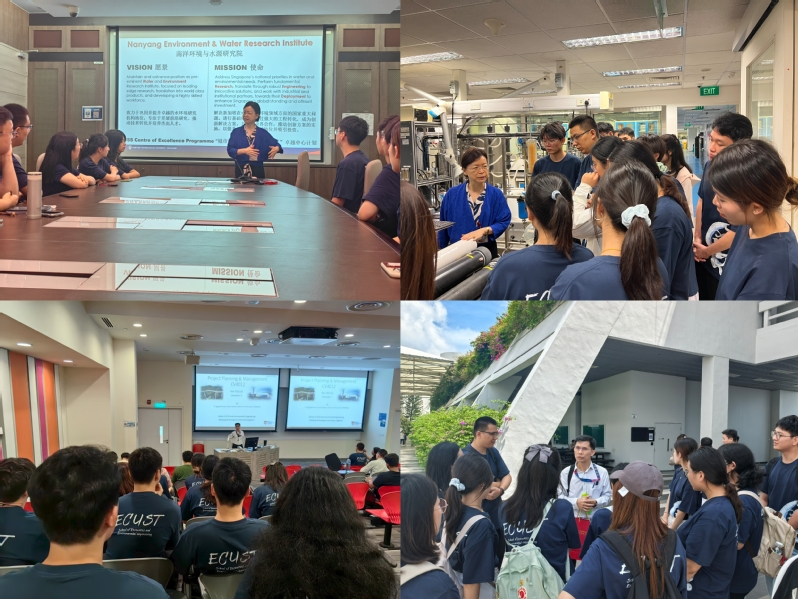
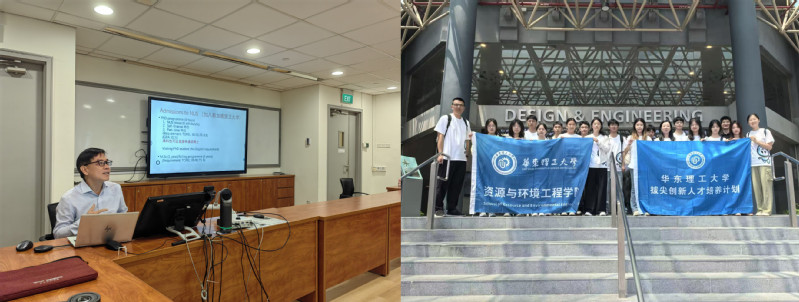
Professor Yang Wenming of the School of Engineering, the National University of Singapore, gave an academic lecture themed the Design of the New Generation of Efficient and Zero-greenhouse-gas-emission Maritime Engine for the practical group and shared the international influence, the direction of scientific research, and the situation of international exchange of the National University of Singapore. The teacher Zhou Lei introduced the departments and specialties of our university and its schools, disciplinary features, student training modes, main scientific research orientations, etc. The teacher Cao Na exchanged regarding the co-training project of 3+1+1 implemented by our university and the National University of Singapore and discussed the coverage of subsequently expanded specialties, the expansion of the co-training scale, etc. in depth. Students' consulted the details of the problem that they cared about, such as course setting, requirements for graduation, internship and employment, etc.
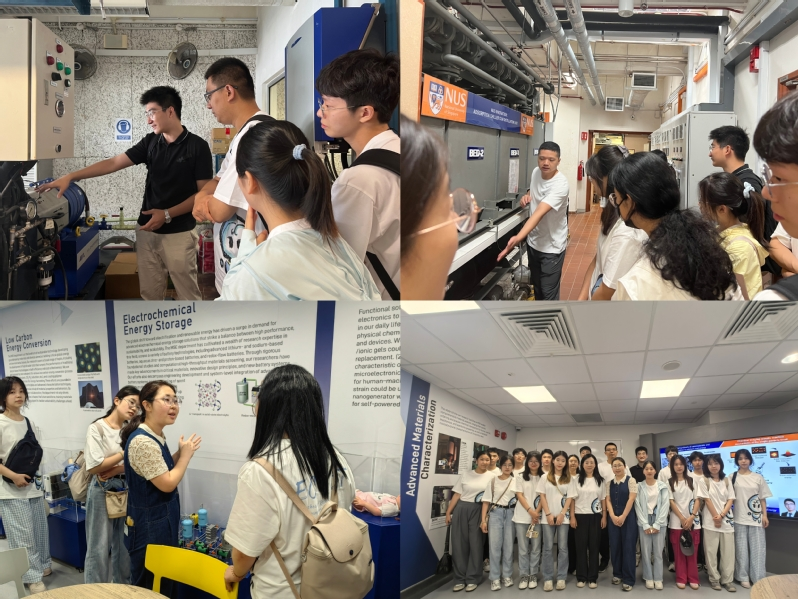
After the seminar was over, the practical group visited the laboratories of multiple relevant subject groups of the College of Design and Engineering. Gao Ming, a Visiting Scholar of the National University of Singapore and a Postdoctoral Researcher of the School of Resource and Environmental Engineering, introduced various high-tech, precise, and advanced instruments and devices of the subject group of Professor Yang Wenming to teachers and students, and Chen Weidong, a Postdoctoral Researcher of the subject group of Professor CHUA Kian Jon vividly introduced the working principle of the gas turbine device of combined heat and power generation in detail for teachers and students. Bao Luri, a Postdoctoral Researcher jointly cultivated by the School of Resource and Environmental Engineering and the National University of Singapore guided the teachers and students of the practical group to visit the laboratory of the subject group of Professor Qing Wang, in which Bao Luri conducted his studies, and introduced the subject group's comprehensive research progress and achievements in the field of electrochemical energy transformation and storage, especially their innovative targeted technology of redox.
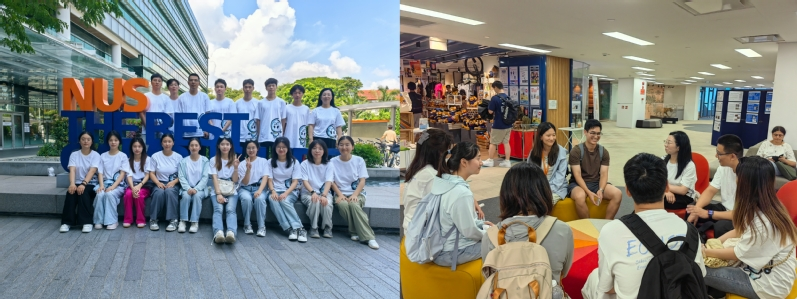
Two alumni graduated from the 2025 co-training undergraduate program of the School of Resource and Environmental Engineering of our university and the National University of Singapore, 3+1+1, Shi Junshuo and Bi Jingjie, also attended the forum of the practical group to share their experiences and understandings accumulated during their living and study period in Singapore. They encouraged low-grade students to actively expand their international horizon and enhance their comprehensive ability.
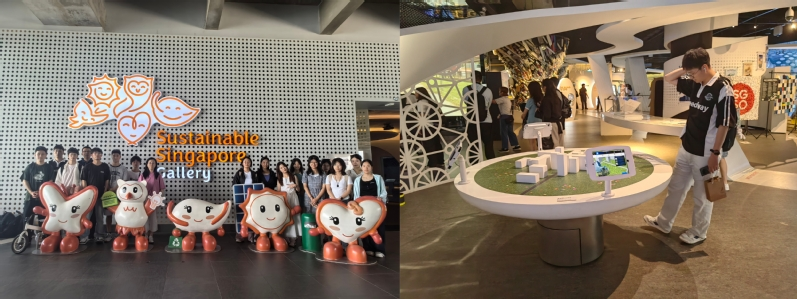
The study tour group also conducted study and investigation in the Gardens by the Bay and Sustainable Singapore Gallery. The huge greenhouse building, giant trees, aerial walkways, and waterscape designs all reflected Singapore's leading concept in terms of ecological construction and urban greening. Through rich interactive exhibitions and video materials in the Sustainable Singapore Gallery, the study tour group comprehensively learned about Singapore's national strategies and measures of public education in terms of water resource management, garbage disposal, green architecture, etc.
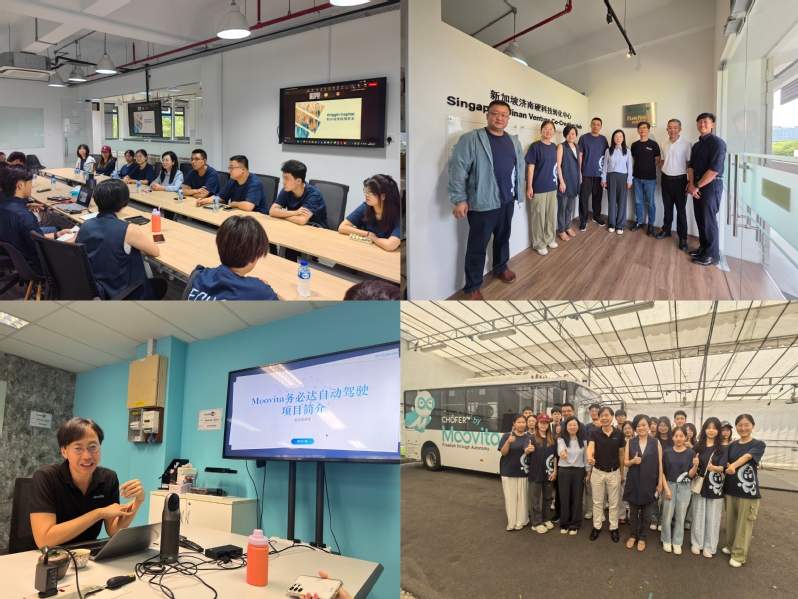
The School of Resource and Environmental Engineering also actively coordinated with enterprises for resources to improve students' understanding of the industrial development and the industrial prospect. The practical group visited the automatic drive company MooVita and the investment company Origgin. The responsible person of the company Origgin introduced the company's developmental history, business overview, and core orientation of the company in detail for the practical group and introduced the details of the commercialization path of the projects of energy science and technology, Singaporean government's green financing incentive policies, etc., to encourage students to calculate every environmental account with the thinking of engineers. The practical group also visited the Singapore-Jinan Hardcore Technology Transformation Center and communicated with the responsible person. The responsible person of the group MooVita introduced the company's technical advantages in the field of unmanned driving, industrial layout, global strategies, and implementation situation in China and encouraged students to attach importance to cross-border disciplines and train their competence in engineering practice. At the same time, the responsible person invited teachers and students to conduct communication and cooperation in the Chinese Branch located at the New Coastal Zone of Tianjin. The responsible person also guided the practical group to visit the company's site for research and development and automatic drive prototype vehicles that had been put into testing on site.
The study tour in Singapore covered multiple fields, including academic communication, course study, ecological investigation, industrial practice, cultural experience, etc., enriched students' knowledge reserves, expanded their international horizons, and enhanced their competence in cross-cultural communication. Students all said that they would encourage themselves to continuously grow with the gains they obtained in the study tour, continuously explore in study and practice, and actively devote themselves to the great practice of the construction of a beautiful China. In the future, the School of Resource and Environmental Engineering will continuously deepen international communication and cooperation, enrich students' opportunities to study abroad, and make contributions to the cultivation of top and innovative talents with a global horizon and the ion of the high-quality development of the university.