
The School of Resource and Environmental Engineering of the East China University of Science and Technology organized teachers and students to take a 5-day study tour in Hong Kong during the summer vacation to expand students' international horizon and deepen their professional understanding and cross-disciplinary communication. The group of the study tour included 3 teachers and 15 undergraduates and postgraduates, who successively visited the City University of Hong Kong, the Hong Kong Polytechnic University, and the University of Hong Kong and centered on cutting-edge fields, including energy, environment, sustainable development, etc., to carry out systematic academic communications and laboratory visits.
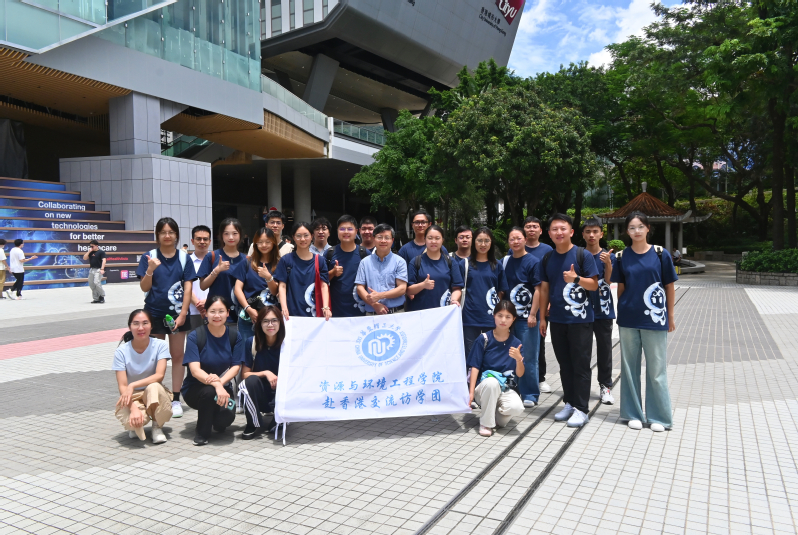
In the morning of August 22, the study tour group arrived at the City University of Hong Kong (CityU), and it was enthusiastically welcomed by Professor Xu Chunbao of the School of Energy and Environment. Xu Chunbao is a Professor who teaches Advanced Biorefinery at the City University of Hong Kong and an Academician of the Canadian Academy of Engineering. He is committed to biorefinery, biomass transformation, green chemical engineering, waste reclamation, the application of biomass in metallurgy, etc. He introduced the school-running tenet and the disciplinary layout of the School of Energy and Environment first, and then centered on the system of biomass energy and ocean energy to make a special academic report to intensively elaborate the collaborative mechanism of the two types of energy in the framework of the cyclic economy and their contributions to the achievement of the goal, carbon neutrality.
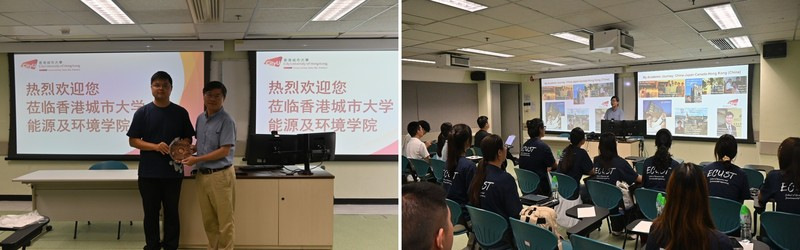
In his report, Xu Chunbao extended the scope of fundamental theories to engineering practice, in combination with the continuous reaction device, alkali metal ultrasonic wave cleaning, and other core technologies developed by the team, to explain efficiency optimization and technical challenges faced in the process of biomass energy transformation. Students centered on the catalytic path of biomass, alkali metal recycling processes, etc., to ask questions, and Xu Chunbao combined experimental data and industrial cases to answer these questions one by one. The on-site atmosphere of the discussion was animated.
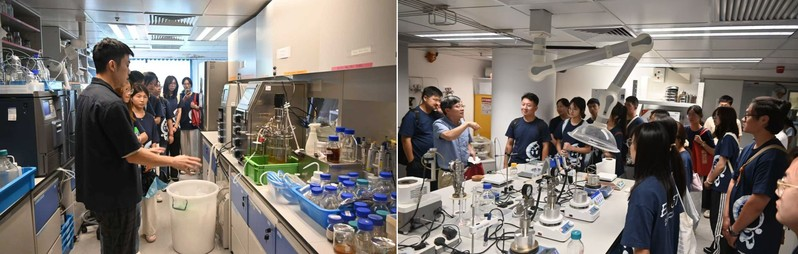
Then, Professor Ding Lu of the School of Resource and Environmental Engineering, East China University of Science and Technology, introduced the groundbreaking progress and industrial achievements of the multi-nozzle opposed coal-water slurry gasification technology made by the Research Institute of Clean Coal Technology of our university and anticipated the future development of the gasification technology in energy cleaning and transformation. Later, with the guidance of Xu Chunbao, the study tour group entered the laboratory to visit on site. The place contained microorganism culture platforms, pyrolytic test systems, and multiple independently researched and developed pilot testing installations. Students asked questions about reactor design, product analysis, and other details, and showed their strong interest in scientific research.
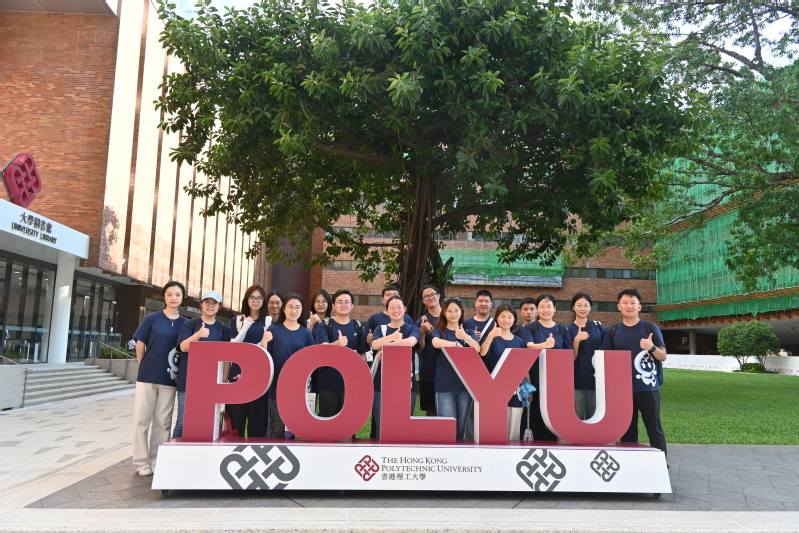
In the afternoon of the same day, the study tour group visited the Hong Kong Polytechnic University (PolyU) for an on-campus visit and communication. As a higher learning institution that is famous for applied studies and professional education and ranks in the top-100 universities in the world, the Hong Kong Polytechnic University has a significant influence in multiple disciplines, such as Engineering, Environment, etc. The representatives of the university's students from the Chinese Mainland introduced the campus construction situation and disciplinary characteristics to the study tour group, and teachers and students visited the university's main buildings of scientific research and teaching and took group photos together.
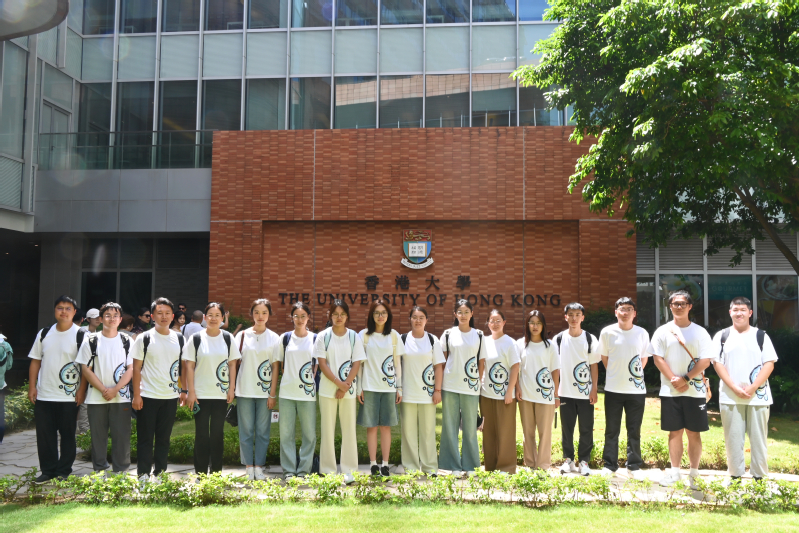
In the morning of August 23, the study tour group visited the University of Hong Kong and attended the academic seminar themed Energy Development and Sustainable Development. Professor Zhang Xiaoling of the University of Hong Kong made a report first. She started from the background of global energy transformation to analyze challenges and chances faced by energy structure revolution, and she specially pointed out the crucial effect of energy storage technology in the scaled application of renewable energy She systematically summarized the systematic path and scientific problems of a series of energy ranging from fossil energy to clean energy to construct a multi-scale energy analytical framework for audiences. Professor Ding Lu of the School of Resource and Environmental Engineering took gasification technology as an example to profoundly discuss the core processes and engineering applications of the technology in high-carbon-content resource low-carbon utilization and highlight the importance of gasification for the high-value transformation of coal and biomass.
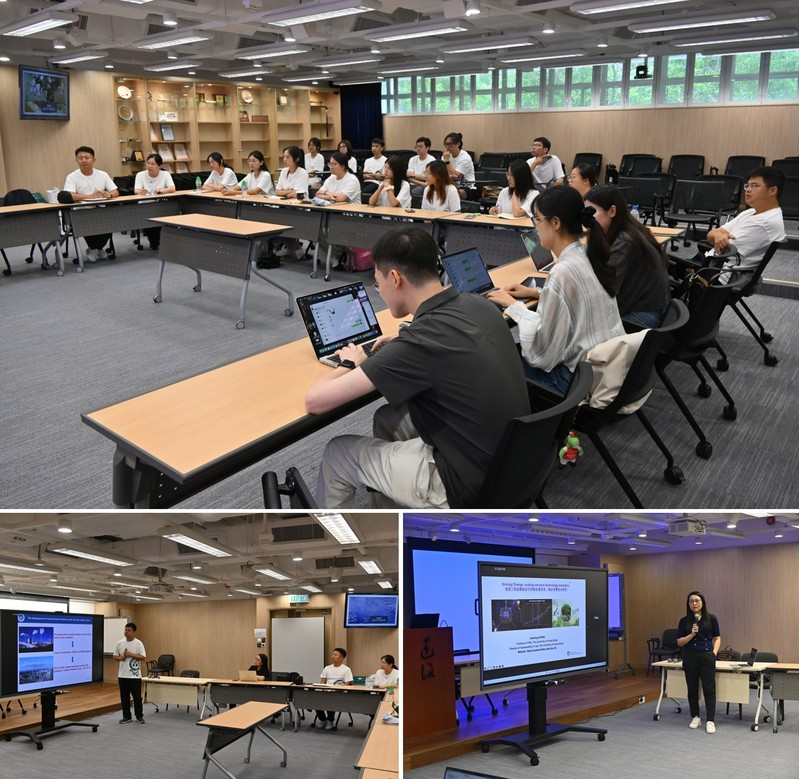
After the report was over, teachers and students of the two universities had a cross-university dialogue related to the economic efficiency of new energy, the applicability of large-scale models in the studies of concrete regions, gasification system cost optimization, etc. Both Zhang Xiaoling and Ding Lu thought that the integration of digital approaches and energy engineering is an important direction of future studies, and the differences between the two places' energy structures also create possibilities for mutually complementary cooperations.
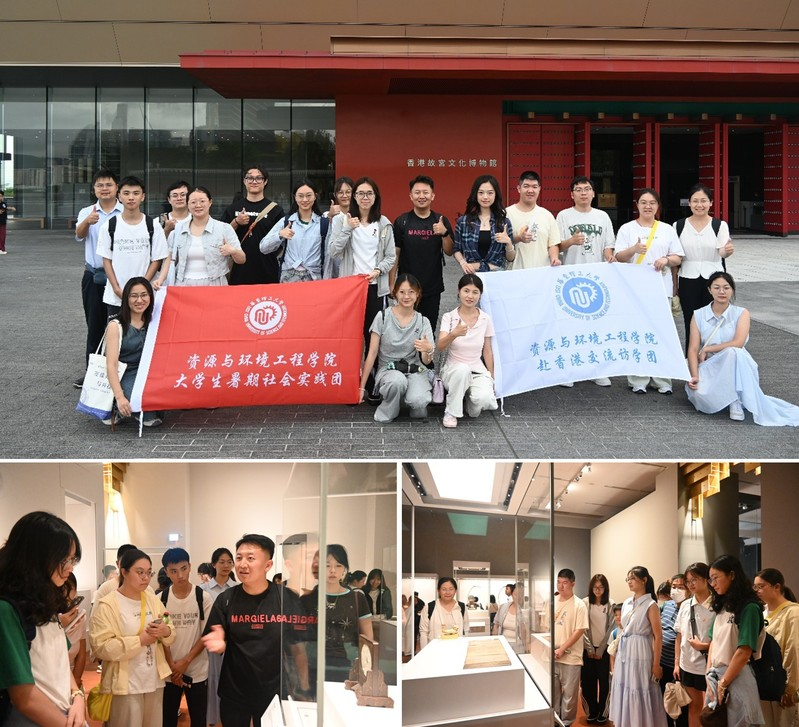
Through academic exchanges, laboratory visits, and themed seminars, the academic study tour in Hong Kong expanded students' academic horizon, consolidated their systematic understanding of the field of energy and environment, and further ed the mutual understanding of Shanghai and Hong Kong in terms of high-level scientific research and talent training. All students said that they would transform the knowledge they learned and their feelings into the internal driving force of the ion of resource recycling, energy transformation, and urban sustainable development and strive to become high-quality talents needed by the country, with an international horizon and competence in innovation.